Traveling between islands in the Andamans feels exciting—until motion sickness hits. Many travelers search variations of “Will I feel sick on the Andaman ferry?” or “how to prevent nausea on sea boats” before booking tickets.
This guide answers that exact concern with precision.
You will learn:
- Why the Makruzz ferry design reduces motion
- The exact seat strategy that minimizes discomfort
- Proven techniques to cure seasickness in ferry travel
- What to eat, what to avoid, and what actually works
Understanding Seasickness on Andaman Ferries
Why do people feel sick on ferries?
Seasickness occurs due to a mismatch between:
- What your eyes see
- What your inner ear senses
When the boat moves, your inner ear detects motion. But if you sit inside and look at a fixed object, your eyes report stillness. This sensory conflict triggers nausea.
Common symptoms include:
- Dizziness
- Sweating
- Vomiting
- Fatigue
Many travelers worry about cure seasickness in ferry rides, especially during rough sea conditions.
Why Makruzz Ferry Feels More Stable
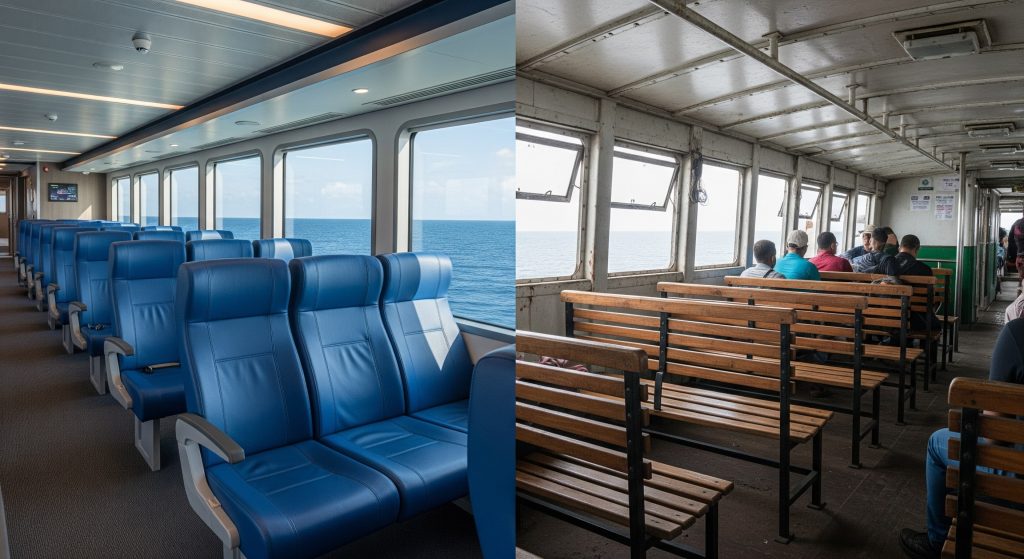
The Makruzz ferry uses a twin-hull (catamaran) design.
What does that mean for you?
- Two parallel hulls balance the vessel
- Reduced rolling compared to single-hull boats
- Faster stabilization after wave impact
- Less side-to-side motion
Real impact on passengers:
You experience less rocking, which significantly helps people trying to cure seasickness in ferry travel.
However, stability does not mean zero motion.
During May pre-monsoon winds, waves become unpredictable. Even a catamaran can produce mild vertical bouncing.
Will You Get Seasick on the Makruzz Ferry?
The honest answer: maybe but it’s manageable.
You are more likely to feel sick if:
- You have a history of motion sickness
- You travel during rough sea months (May–September)
- You sit in the wrong area of the ferry
- You travel on an empty or heavy stomach
You are less likely if:
- You choose the right seat
- You follow pre-boarding precautions
- You use preventive medication
- You stay visually oriented with the horizon
With the right strategy, most travelers successfully cure seasickness in ferry journeys.
Best Seats to Avoid Seasickness on Makruzz
Golden Rule: Center + Lower Deck
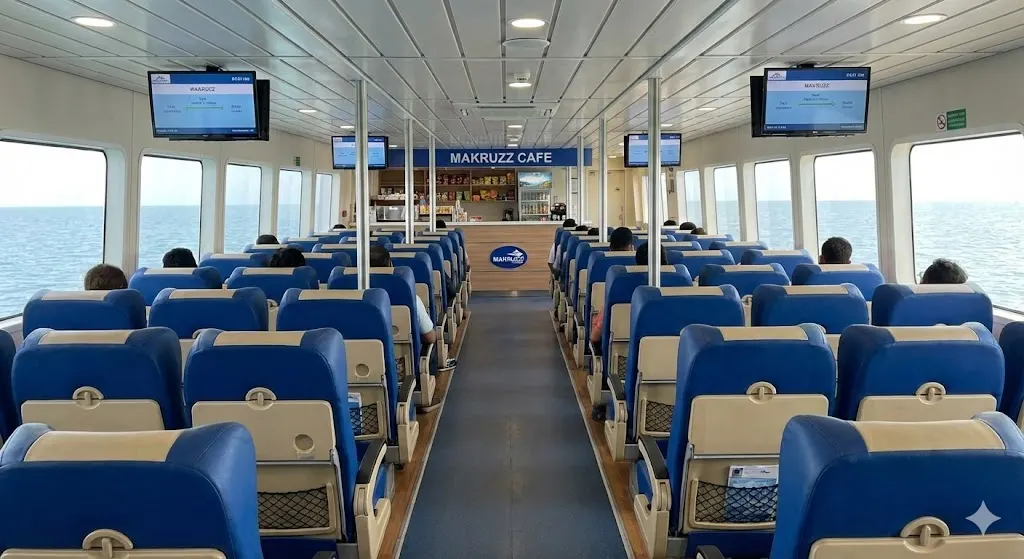
If you want to reduce motion impact, seat selection matters more than anything else.
Choose these seats:
- Lower deck
- Middle section (center of gravity)
- Slightly toward the back (but not extreme rear)
Avoid these seats:
- Front rows (maximum vertical movement)
- Upper deck (more exposed to motion)
- Extreme rear (engine vibration + bounce)
Why this works:
The middle of the ferry acts as the pivot point, so it moves the least.
This single adjustment dramatically helps you cure seasickness in ferry travel without medication.
Practical Ways to Cure Seasickness in Ferry Travel
1. Use Over-the-Counter Medication
Medications remain the most reliable option.
Common options in India:
- Avomine
- Dramamine
How to take:
- 30–60 minutes before boarding
- Follow dosage instructions strictly
These medicines actively prevent symptoms, making them essential if you want to cure seasickness in ferry journeys effectively.
2. Fix Your Gaze on the Horizon
This is one of the most powerful natural techniques.
Why it works:
- Aligns visual input with inner ear motion
- Reduces sensory conflict
- Stabilizes brain perception
How to do it:
- Sit near a window
- Focus on a distant point
- Avoid reading or using your phone
This technique alone helps many people cure seasickness in ferry rides naturally.
3. Eat Smart Before Boarding
Your stomach condition directly impacts nausea.
Eat this:
- Light meals
- Dry foods (toast, biscuits)
- Bananas
Avoid this:
- Oily food
- Spicy meals
- Alcohol
- Dairy-heavy items
Travelers who ignore diet often fail to cure seasickness in ferry trips, even with good seats.
4. Try Ginger-Based Remedies
Ginger acts as a natural anti-nausea agent.
Options:
- Ginger tea
- Ginger candy
- Ginger capsules
Many frequent travelers use ginger to cure seasickness in ferry travel without drowsiness.
5. Control Your Body Position
- Sit upright
- Avoid sudden head movements
- Keep your head aligned with motion
Stability reduces sensory confusion.
6. Stay Hydrated, But Don’t Overdrink
Drink small sips of water.
Avoid:
- Carbonated drinks
- Excess liquids before travel
7. Get Fresh Air When Possible
If allowed:
- Step outside briefly
- Avoid enclosed spaces
Fresh air reduces nausea triggers.
What NOT to Do on the Ferry
Avoid these common mistakes:
- Don’t sit at the front for views
- Don’t stare at your phone
- Don’t skip meals completely
- Don’t panic (anxiety worsens symptoms)
People who follow these mistakes struggle to cure seasickness in ferry journeys.
Special Tips for May–September Travelers
During pre-monsoon and monsoon:
- Book early seats (center section)
- Take medication proactively
- Choose morning departures (calmer waters)
- Avoid last-minute heavy meals
Sea conditions become unpredictable, so preparation becomes critical.
Advanced Strategy: Combine Methods
The most effective approach is layered:
- Correct seat
- Medication
- Visual alignment (horizon)
- Light food
This combination almost guarantees you can cure seasickness in ferry travel.
Final Verdict: Should You Worry?
No – but you should prepare.
The Makruzz ferry offers one of the most stable ferry experiences in India.
If you:
- Pick the right seat
- Follow pre-travel precautions
- Use basic remedies
You can confidently cure seasickness in ferry travel and enjoy the journey.
Quick Action Checklist
Before boarding:
- Take medication
- Eat light
- Choose center seats
During travel:
- Look at the horizon
- Stay calm
- Avoid screens
After that, you will likely enjoy a smooth ride across the Andaman waters.